Walk It Off: Medicare Now Covers Treadmill Therapy

 October 11, 2017 by Dean Bellefeuille

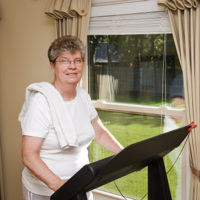
An older woman receiving elderly care in Syracuse participates in treadmill therapy.

There’s encouraging information for those with peripheral artery disease (PAD), a debilitating condition that can occur from smoking or diabetes and can increase a person’s likelihood of developing a heart attack or stroke, and sometimes resulting in limb amputation. Medicare will now cover the cost of treadmill therapy once prescribed and monitored by a medical professional.

How Does Treadmill Therapy Help People With PAD?

With few treatment methods, individuals battling with PAD experience soreness and cramping in the legs described as “feeling as if their leg is in a vise,” according to University of Minnesota’s Diane Treat-Jacobson. Prescription drugs have proven inadequate in decreasing pain, and although stent or bypass operations can certainly help, they’re pricey and come with their own associated risks. The latest research is revealing that treadmill therapy can be just as effective, at a greatly reduced cost, and with Medicare on board to pay for that cost, a lot of rehab centers are preparing for a wave of patients prepared to test it out.

The expectation is that various other insurance companies will shortly follow suit and provide coverage for treadmill therapy, which is usually the case once Medicare covers a treatment option. At present, over 2,000 hospital-based therapy centers are preparing to provide treadmill exercise sessions to those whose health professionals prescribe and oversee them.

Considering people who have PAD often restrict regular exercise because of leg pain, the benefits of supervised treadmill therapy go beyond decreased hospitalizations and cost savings to improving heart and lung health, lengthening the distance a person with PAD can walk without discomfort, and even potentially increasing length and quality of life.

If your senior loved one is among the 8 million Americans suffering the difficulties of PAD, or any other medical condition that makes living at home independently a challenge, contact At Home Independent Living. We can offer elderly home care support in numerous ways, including:

  • Offering transportation and accompaniment to therapy treatment along with other healthcare appointments
  • Helping with duties around the home, such as light housework and washing clothes
  • Preparing wholesome and appetizing meals
  • Running errands including picking up groceries and medications
  • Offering encouragement for seniors to participate in physician-approved exercise programs
  • Providing cheerful companionship – somebody with whom to take walks, delight in favorite hobbies and interests, and to get more purposefully engaged in the world around them
  • And much more

Contact us at 315-579-4663 to learn more about our customized elderly home care in Syracuse, Clay, Fayetteville, and nearby areas and elevate the quality of life for your loved one!


Brain Games: Can Online Games Improve Senior Brain Health?

 October 6, 2017 by Dean Bellefeuille

brain health - marietta home health

The online world presents us with instantaneous answers to almost any question we’re able to imagine, learning opportunities beyond what we could have dreamed of a generation before, socialization enhancement, and much more. Among the most enjoyable web developments for those of us in the senior care industry has been brain training applications – the computerized brain games and puzzles that promote enhanced cognitive functioning and overall brain health. But how well do they actually succeed?

AARP has recently been studying these brain games, sharing results in a recent report, Engage Your Brain. Even though further research is needed to better comprehend the long-term benefit of brain-stimulating exercises, what we can say for certain is that neuron connections can be reinforced through learning, bringing about the brain’s ability to transform structure, function, and chemistry, a concept known as brain plasticity. This capability stays in place while the mind ages.

In one study, the Advanced Cognitive Training for Independent and Vital Elderly (ACTIVE), seniors’ cognitive functioning as well as memory revealed a fantastic improvement of close to 63% when utilizing online cognitive training programs. Additionally, elders who took part in the research exhibited a 48% less chance of causing car accidents, and could more efficiently manage such day-to-day responsibilities as money management, taking prescriptions, and more.

Dr. Michael Merzenich, co-founder of Posit Science (creators of the Brain HQ program), has managed a number of scientific trials to better identify the impact of specific online brain strengthening applications, specifically, whether cognitive decline can be minimized or slowed. Final results suggested a marked improvement in memory, with participants’ memory recall the same as those ten years their junior. In contrast, activities like crossword puzzles did not demonstrate a direct effect on cognitive decline, with the elderly who routinely engage in crossword puzzles still trailing young people in their degree of functioning. Even so, when compared to other seniors who didn’t work on crossword puzzles, functioning does appear a little enhanced. Dr. Merzenich clarifies it as, “Crossword puzzles might improve your cognitive function, but it’s equally likely that having good cognitive function encourages you to do crossword puzzles.” Dr. Merzenich discusses his studies in more depth in this TED Talk.

It is important for individuals to adequately investigate Internet-based programs that guarantee to boost a senior’s memory or cognitive functioning level, since there have been some companies recently who’ve been shown to falsely advertise such promises.

At Home Independent Living, the leader in Marietta home health care, provides opportunities for seniors to maximize cognitive functioning and improve brain health through mentally stimulating games, reminiscing, socialization and much more. Contact us for in-home suggestions for your client or senior loved one!


Chronic Osteoarthritis Pain? Never Fear, Help Is Here!

 September 20, 2017 by Dean Bellefeuille

Osteoarthritis Pain

It’s a group none of us want to join, yet even so, as many as 10 million Americans are members: sharing a diagnosis of osteoarthritis. Resulting from the wearing away of cartilage over the years, osteoarthritis usually has an effect on bigger joints, like the knees, and may be debilitating to a senior’s quality of life. With three main recommended treatment plans – over-the-counter drugs to help reduce inflammation, such as ibuprofen, prescription painkillers such as tramadol, or physical therapy – a good number of people with osteoarthritis have reconciled themselves to a life of limping, discomfort, modified activity levels, and not surprisingly, chronic pain. (more…)


How to Approach Senior Healthcare Your Way

 September 13, 2017 by Dean Bellefeuille

senior healthcare

In an idealistic world, senior healthcare would focus on you and your personal preferences, following your specific needs and wishes – fitting within your schedule and routine, unhindered by problems like an unwavering medical professional who views healthcare options in black and white. Real life is far from perfect unfortunately, and quite a few of us have a tendency to submit to doctors’ orders with no reflection that there might be a better-suited choice. (more…)


Dealing with Dementia: When Dementia Leads to Crime

 September 8, 2017 by Dean Bellefeuille

Dealing with Dementia

It’s almost inconceivable – a pleasant, elderly, at times confused grandmother with Alzheimer’s disease being handcuffed and put under arrest. And yet that very scene is playing out at an alarming rate among older persons, over 100,000 of them, according to the most recent statistics – an increase of just about 30% in the past decade. This significant increase in arrests among the elderly might be in part because of the growth in the population of older adults, as well as the rise in diagnoses of Alzheimer’s disease and other types of dementia. (more…)


Understanding the Impact of Family Conflict on Senior Care

 August 21, 2017 by Dean Bellefeuille

family conflict

Perhaps your family rivals those on Walton’s Mountain in its unconditional love, unwavering patience with one another, and determination to stick together through thick and thin. But if your family is similar to most, there’s undoubtedly some level of dysfunction, some lingering stubborn sibling rivalry, and even a little lingering competitiveness to be Mom’s and Dad’s favorite. These sorts of family conflicts can be aggravated as parents’ caregiving needs increase and family members are forced to work together, resurfacing old childhood issues. (more…)


Can Senior Sleep Disorders Be a Sign of Alzheimer’s?

 August 14, 2017 by Dean Bellefeuille

Senior Sleep Disorders

It is a common problem for many older adults – falling and staying asleep for a full night’s rest. Apart from feeling a little foggy the next morning, however, as well as feeling the need for an afternoon snooze to catch up on lost sleep, the repercussions have felt marginal. That is, until research recently revealed a possible link between senior sleep disorders and Alzheimer’s disease. (more…)


Do You Display Controlling Behavior While Caring for Senior Loved Ones?

 August 7, 2017 by Dean Bellefeuille

Caring for Seniors Controlling Behavior

Feeling safe, protected and cared for is so wonderful. Dads and moms thrive on ensuring their young children are enveloped within the comfort of knowing their needs will be satisfied, providing the safety net that permits them the self-confidence to explore the world about them. Yet there comes a phase in all children’s lives when the craving for self-sufficiency outweighs the benefit of protection, and they have to discover firsthand what it means to stumble, fall and get back up again by themselves. (more…)


Hallucinations, Illusions, and Suspicions – How to Ease These Effects of Dementia

 July 24, 2017 by Dean Bellefeuille

effects of dementia

For those providing care for a senior struggling with the effects of dementia, a variety of complex behaviors must be very carefully managed, but perhaps the most challenging include hallucinations, illusions, and suspicions that other individuals are out to cause him problems or ill will. Mistaken impressions such as these take place most often in the late stages of progressive dementia as a result of changes within the brain. It’s essential to first understand the reason behind these emotions and actions, and to deal with the root cause. (more…)


Alzheimer’s Tip: When a Senior Insists, “I Want to Go Home!”

 July 11, 2017 by Dean Bellefeuille

Alzheimer's

Like they say, there’s no place like home; but what do you do when a senior with dementia insists on going home – when he/she currently IS home? Regrettably, when caring for an elderly person with Alzheimer’s disease or another form of dementia, this is an all too common dilemma. And the confusion and plaintive yearning being expressed are simply heartbreaking – and, if we are truthful, aggravating. (more…)